
Long County Arrest Records and Court Charges
Long County arrest records are created on the law-enforcement and custody side. They can show the person arrested, arresting agency, arrest date, charge description, warrant number, bond status, and where the person is housed. Long County is unusual because the Sheriff's Office says the county does not currently operate its own jail. Long County inmates are housed in surrounding county jails, and holds on Long County inmates must be placed with the Long County Sheriff's Office rather than the outside jail.
Court charge records begin when a charge moves into court. The charge may come through a complaint, accusation, indictment, warrant application, or citation. The Atlantic Judicial Circuit District Attorney prosecutes felony crimes in Long County, while State Court handles misdemeanors and traffic matters. The full case record, including pleas, motions, disposition, and sentencing, belongs with Long County criminal court records. The arrest and charge view is narrower: it connects booking facts to the formal charges filed after arrest.
Find Long County Arrest Records
The official current-inmate roster is the most direct public source for arrest and custody fields when a person is currently booked. The roster can show name, status, sex, height, weight, address where available, arrest date, arresting agency, days in jail, total bond, warrant number, counts, statute, description, misdemeanor or felony classification, court, and housing county. It does not replace the court file because a jail roster may not show the final plea, dismissal, or sentence.
- Start with the Long County Sheriff's Office current-inmate link when the person may still be in custody.
- Read each charge row separately because one arrest can produce multiple counts and different courts.
- Note the warrant number, statute, charge description, M/F classification, court, and bond field.
- Contact the Clerk of Superior Court for Superior or State Court charge filings, dates, and final court action.
- Use the Sheriff's Office or Georgia Open Records Act route for booking or warrant records not posted online.
The custody side is separate from statewide prison or supervision data. The Georgia Department of Corrections Find an Offender search is for state custody or supervision records, not current Long County jail housing.
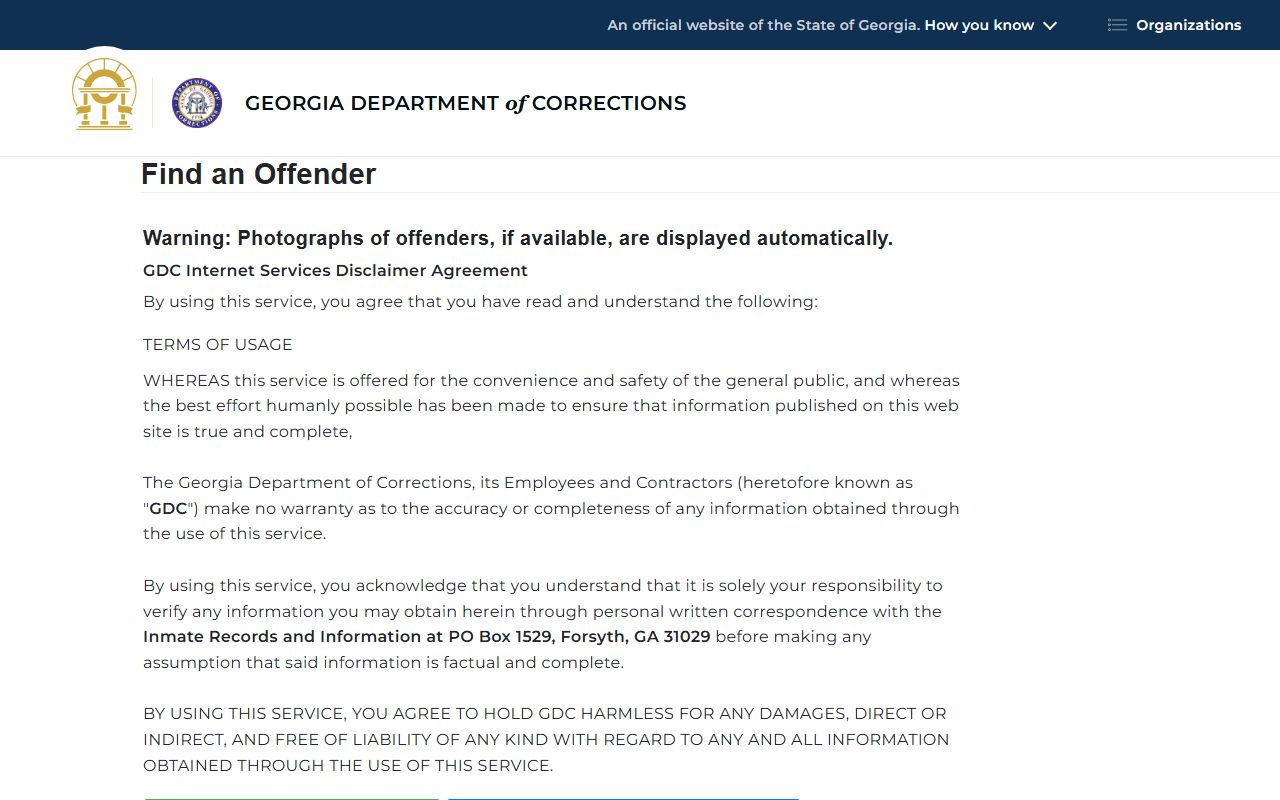
Use the GDC search when the question is state custody or supervision, and use Long County sheriff or court records for the arrest-to-charge path.
Long County Court Charge Rows
Charge rows on the Long County roster are detailed enough to help identify the court record. Research found warrant numbers such as W25-138, counts, Georgia statute references, descriptions, misdemeanor or felony classifications, court values, and total bond. Court values observed included Superior, Superior Court, State, State Court, and Magistrate Court. Those fields point the user toward the court that will have the case record.
| Field | What It Shows |
|---|---|
| Warrant Number | A warrant identifier, often year-coded in observed entries. |
| Counts | The number of counts for a listed charge row. |
| Statute | The O.C.G.A. section tied to the charge, such as assault, robbery, obstruction, or drug statutes. |
| Description | The short offense label shown on the roster or charging record. |
| M/F | Misdemeanor or felony classification, with one observed formatting irregularity in the research. |
| Court | The court tied to the charge, such as Superior, State, or Magistrate Court. |
| Bond | Total bond, denied bond, or other bond status shown for the inmate record. |
Charges After Arrest Documents
Charges after arrest reach court through charging documents. Georgia and Long County research uses terms such as warrants, accusations, indictments, citations, and complaints. An arrest or booking entry may list a suspected offense, but the court charge record depends on what is filed with the court and how the prosecutor proceeds. Felony prosecution in Long County is tied to the Atlantic Judicial Circuit District Attorney, while misdemeanor and traffic matters can proceed in State Court.
| Document | Usually Filed By | Common Long County Use | What to Check |
|---|---|---|---|
| Complaint | Law enforcement or prosecutor | Early criminal accusation or lower-court matter. | Facts alleged, charge label, court assignment. |
| Accusation / Information | Prosecutor | Many misdemeanor and some felony prosecution paths. | Counts, statute, defendant, plea and disposition later in file. |
| Indictment | Grand jury | Serious felony case filed in Superior Court. | Grand-jury counts, statute, arraignment, motions, sentence. |
Long County Charge Status
A charge status can change after arrest. A defendant may be booked on one offense, then charged with a different count after prosecutor review. A charge can be amended, reduced, dismissed, nolle prossed, or resolved by plea or trial. Long County court users should compare the sheriff roster or warrant record with the court docket and final disposition before treating a charge as the final result.
| Status | What It Means | Where to Verify |
|---|---|---|
| Pending | The charge is open and has not reached final court action. | Clerk docket, next hearing notice, bond paperwork. |
| Amended | The charge wording, count, or statute changed after filing. | Amended accusation, indictment, order, or docket entry. |
| Reduced | The charge moved to a lower offense or lesser count. | Plea paperwork, disposition, prosecutor filing. |
| Dismissed | The court ended that charge without conviction. | Dismissal order or final disposition. |
| Nolle Prosequi | The prosecutor declined to pursue that charge further. | Prosecutor filing and court disposition. |
Charges vs Convictions
A charge is not a conviction. This distinction is critical for Long County arrest records because the roster may show the charge that existed at booking or warrant execution, while the court record later shows whether the charge was proven, dismissed, amended, or resolved by plea. A person may have an arrest record without a conviction on every listed count.
| Question | Charge | Conviction |
|---|---|---|
| Record Stage | Before final case outcome. | After plea, verdict, or final adjudication. |
| Legal Meaning | An accusation by law enforcement or prosecution. | A court result establishing guilt or equivalent final outcome. |
| Can Change | Yes, it can be amended, reduced, dropped, or dismissed. | Can be appealed, corrected, restricted, or affected by later order. |
| Best Proof | Charging document and docket. | Certified disposition and sentence. |
Bond and Court Assignment
Bond information helps connect arrest records to court charge records. The Long County Sheriff's Office says it does not set bonds. Bonds are set by Magistrate Court, State Court, or Superior Court. Accepted bond paths include cash bond, in-county property bond, out-of-county property bond, and bail bond. The sheriff's page also states that no bonding company currently operates in Long County, while approved surrounding-county bondsmen may be used.
For court-charge review, bond status is not the final outcome. A denied bond, cash bond, property bond, or surety bond tells the reader about release conditions. The disposition and sentence are separate court fields. If a person is released, court-date notices come from the Clerk of Court, and the person must keep the court and bondsman updated with address changes.
Note: Bond status explains release conditions, not whether a Long County court charge ended in conviction.
Statewide Charge and History Checks
Long County arrest records and charge records are local records, but statewide systems may help answer custody or criminal-history questions. The Georgia Department of Corrections offender search is for state custody or supervision, while the Georgia Bureau of Investigation explains criminal history services and the sex-offender registry. Georgia.gov also explains that GDC offender search differs from county jail custody. These are official state resources, but they do not replace a certified Long County court disposition.
Georgia.gov describes the state offender search separately from county jail custody. The Georgia.gov offender search guide explains the statewide GDC lookup.
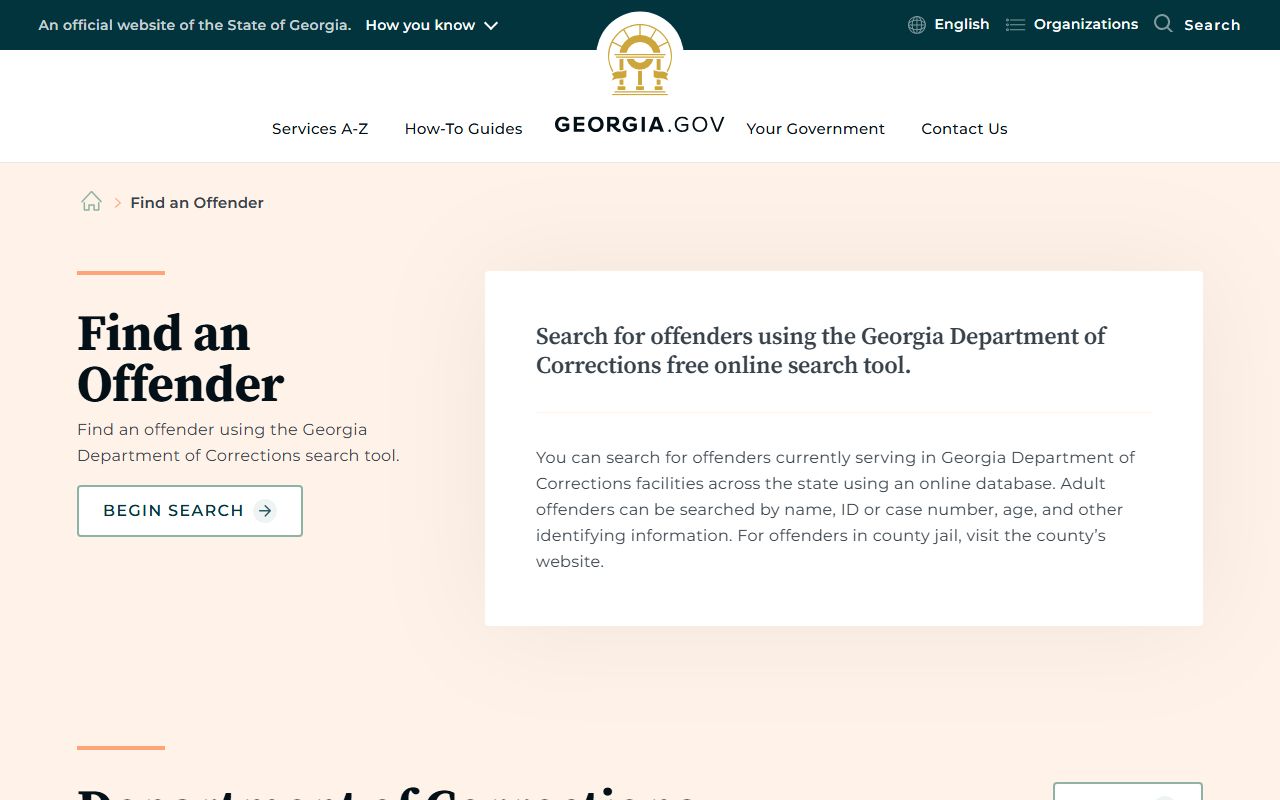
State custody data can help locate a person after sentencing, but charge status still has to be read from the local court record.
Restricted Long County Charge Records
Some charge records do not remain open to public view. Juvenile charges are not ordinary adult public records. Georgia record restriction under O.C.G.A. Section 35-3-37 can limit public access to qualifying criminal-history information. First-offender records can also become unavailable to the public when statutory conditions are met. Adoption and mental-health records are outside ordinary arrest-charge access and should be treated as confidential or court-controlled.
| Record Type | Public Access Issue | Practical Step |
|---|---|---|
| Juvenile charge | Restricted under Georgia juvenile law. | Contact the court only if party status, attorney role, or order may allow access. |
| Dismissed or nolle prossed charge | May qualify for record restriction depending on facts. | Check court disposition and arresting-agency process. |
| First-offender matter | May become unavailable to the public after statutory conditions. | Verify the final court order and public-access status with the clerk. |
| Active investigation | May be withheld under law-enforcement or public-record exemptions. | Use the sheriff or agency records custodian and expect limits. |
Request Missing Charge Information
If a Long County arrest or charge does not appear online, use the custodian that matches the record. Booking or warrant-processing records generally start with the Sheriff's Office. Superior and State Court charge filings, court dates, certified dispositions, and sentence records start with the Clerk of Superior Court. Magistrate warrant applications and some lower-court matters start with Probate/Magistrate Court. Georgia's Open Records Act can apply to agency records, but court files and confidential records have separate limits.
Long County Sheriff's Office
6 East Academy Street / P.O. Box 368
Ludowici, GA 31316
(912) 545-2118
Use for sheriff booking, warrant-processing, and agency records when public.
Clerk of Superior Court
458 South McDonald Street / P.O. Box 458
Ludowici, GA 31316
(912) 545-2123
Use for Superior and State Court charge filings, dockets, and certified dispositions.