
Long County Court Docket Sources
A docket is the court's event log. It is not the same as the whole case file. In Long County, a docket may show a filing date, hearing setting, motion, order, plea, payment, or disposition, while the document itself may still need to be requested from the clerk or accessed through a provider. The Clerk of Superior Court is the key contact for Superior, State, and Juvenile Court docket questions, with Juvenile Court access limited by confidentiality rules.
Long County research found several docket paths. Superior and State Court files may be available through provider access where the court participates. State Court traffic and payable matters also have payment-channel records. Probate and Magistrate docket information is handled by the Probate/Magistrate office rather than the Superior Court clerk. A city citation issued in Ludowici may have its own payment or docket trail through the city payment system.
| Docket Source | Use It For | Limits |
|---|---|---|
| Clerk of Superior Court | Superior, State, and Juvenile Court case dates and docket records. | Juvenile records are restricted, and older files may require in-person help. |
| Georgia Courts e-access / PeachCourt | Online provider docket and document access where available. | Account required by provider, and not every Long County file is online. |
| Long County State payment portal | Traffic and payable State Court matters. | Payment lookup is not a full docket search. |
| Probate and Magistrate Court | Probate, marriage, small claims, dispossessory, garnishment, and warrant application matters. | No public Long County probate case-search portal was found. |
Find Long County Dockets Online
Online docket lookup in Long County starts with the type of case. Georgia Courts e-access sends users to provider websites and notes that provider access may require an account. PeachCourt registration is open to attorneys and non-attorneys, and PeachCourt says many state and superior court documents are available online where participating courts provide access. If a docket is not online, that does not mean the case does not exist.
- Decide whether the matter is Superior Court, State Court, Probate Court, Magistrate Court, Juvenile Court, or city court.
- For Superior or State Court, check provider access and have the party name, case number, or approximate filing date ready.
- For traffic or payable State Court matters, use the Long County State Court payment channel and compare it with clerk notice information.
- For Probate or Magistrate matters, contact the Probate/Magistrate office because a public local docket search was not found.
- Ask the court office for the official setting if online data conflicts with mailed notice or bond paperwork.
The Long County State Court payment portal is one researched access point for court-related payment information. The nCourt/Catalis Long County State portal names the local State Court and clerk.
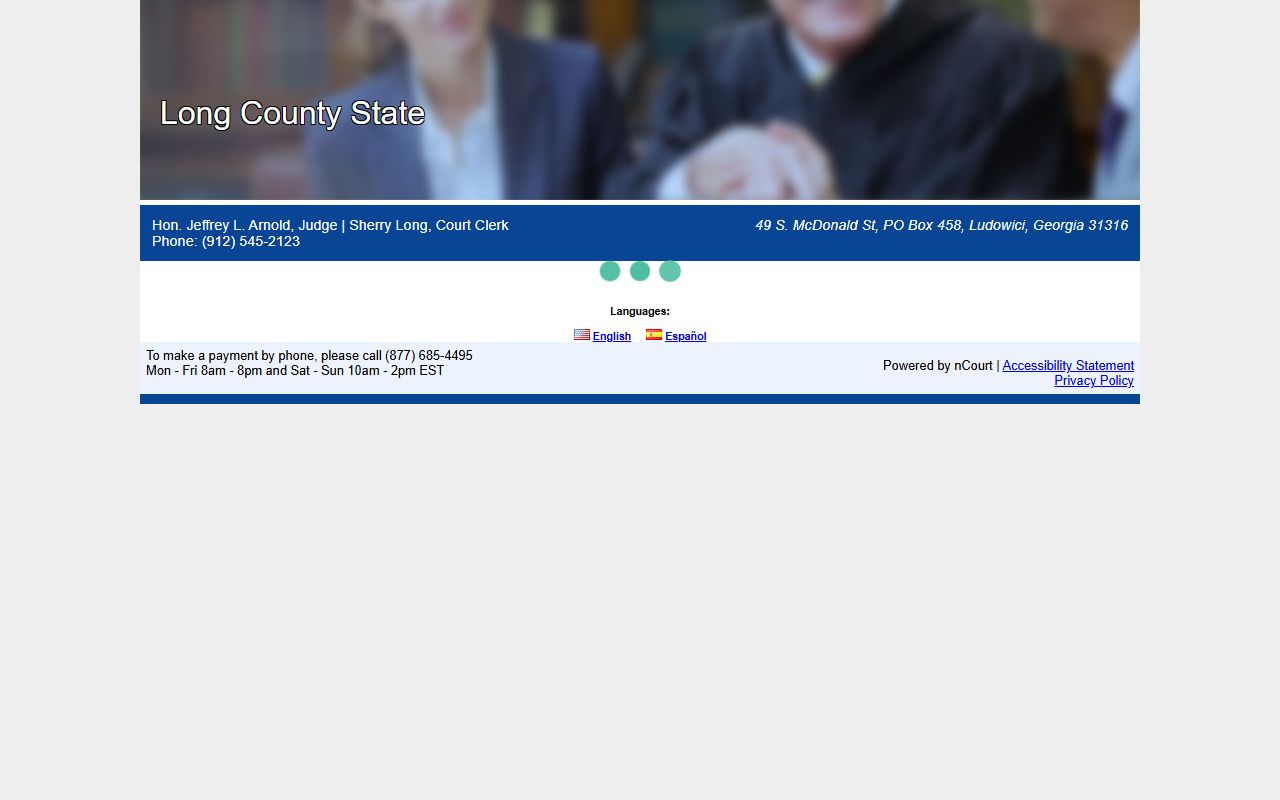
Payment portals can help locate a citation or case payment, but docket entries and hearing settings still need court confirmation.
Long County State Court Dockets
Long County State Court is one of the most concrete docket sources in the research. The local State Court page says court is held every month on the second and fourth Wednesday at 9:00 a.m. unless a person is notified otherwise. The same page directs users to online payment for tickets and tells users to contact the Clerk of State Court about court-date questions. That matters because the docket date may affect bond status, payment deadlines, failure-to-appear consequences, and whether a person must appear rather than simply pay.
The Sheriff's bonding information repeats the local rule: the Sheriff's Office is not responsible for contacting a released or bonded person about a court date. Notice comes from the Clerk of Court, and the person must keep the court and bondsman informed of address changes. For docket users, this means a payment receipt, jail release paperwork, or memory of an old court date should not replace clerk confirmation.
State Court docket review also helps separate the hearing calendar from the payment record. A payable citation may be eligible for online or phone payment, while another misdemeanor or traffic matter may still require appearance. Long County's published court-date pattern gives a starting point, but the clerk's notice controls the date for a specific defendant or citation.
Note: Long County State Court dates should be confirmed with the clerk when notice, payment records, or bond papers differ.
Long County Docket Entry Fields
No free public Long County civil or criminal docket entry was viewable without account or payment during research. The field inventory below reflects the sample case-record fields identified for Long County court access and the event data normally needed to understand a docket. It should be read as a practical field map, not a guarantee that each provider screen uses the same labels.
| Field | What It Shows |
|---|---|
| Case Number | The court or provider identifier used to match the docket to the right file. |
| Entry Date | The date a filing, hearing, order, notice, or payment event was added. |
| Event Type | A filing, hearing, plea, order, judgment, disposition, continuance, or payment event. |
| Party or Filing Source | The party, attorney, clerk, judge, prosecutor, or agency tied to the event. |
| Hearing Date | The scheduled date and time when the docket entry is a court setting. |
| Disposition | The outcome shown when a charge, claim, citation, or case is resolved. |
| Document Link | Provider document access if available, sometimes with a page fee or account requirement. |
Long County Dockets vs Case Files
A docket is useful for tracking movement. A full case file is useful for reading the papers. The difference matters in Long County because PeachCourt may show provider access where available, State Court payment may show a citation workflow, and the clerk may still hold the official paper or electronic court file. A docket line that says a motion was filed does not always show the motion text.
| Question | Docket | Full Case Record |
|---|---|---|
| Format | Chronological list of events. | Documents, pleadings, orders, judgments, and exhibits when public. |
| Main Use | Track hearing dates, filings, status, and disposition. | Review the actual legal filings and certified proof. |
| Access | May be online, provider-based, or clerk-confirmed. | May require provider purchase, clerk copy fee, or in-person request. |
| Limits | May omit sealed details or document text. | May be sealed, restricted, redacted, or unavailable online. |
Lower Court Dockets in Long County
Probate and Magistrate docket access is local and practical. Probate Court handles estates, guardianships, conservatorships, marriage licenses, weapons carry licenses, and vital-record functions. Magistrate Court handles small claims, dispossessories, garnishments, warrant applications, certain minor criminal matters, county ordinance violations, bail setting, and preliminary warrant functions. The local court site states that staff can give case-file information, blank forms, general form guidance, deadlines, due dates, and common term definitions, but cannot give legal advice or predict outcomes.
That staff-help rule is useful when a docket search turns into a filing question. Staff may explain due dates or what is in a case file, but they cannot tell a party whether to file, how to word an answer, what result to expect, or ask the judge to act outside the case process.
City citation matters can be different. The Ludowici payment page lists traffic tickets as a city payment option along with property taxes and utility bills. A person with a city-issued citation should check the issuing court or city payment path instead of assuming the citation is a county State Court docket.
Ludowici's payment channel is documented separately from county State Court. The Ludowici Government Window page includes a Traffic Tickets option.
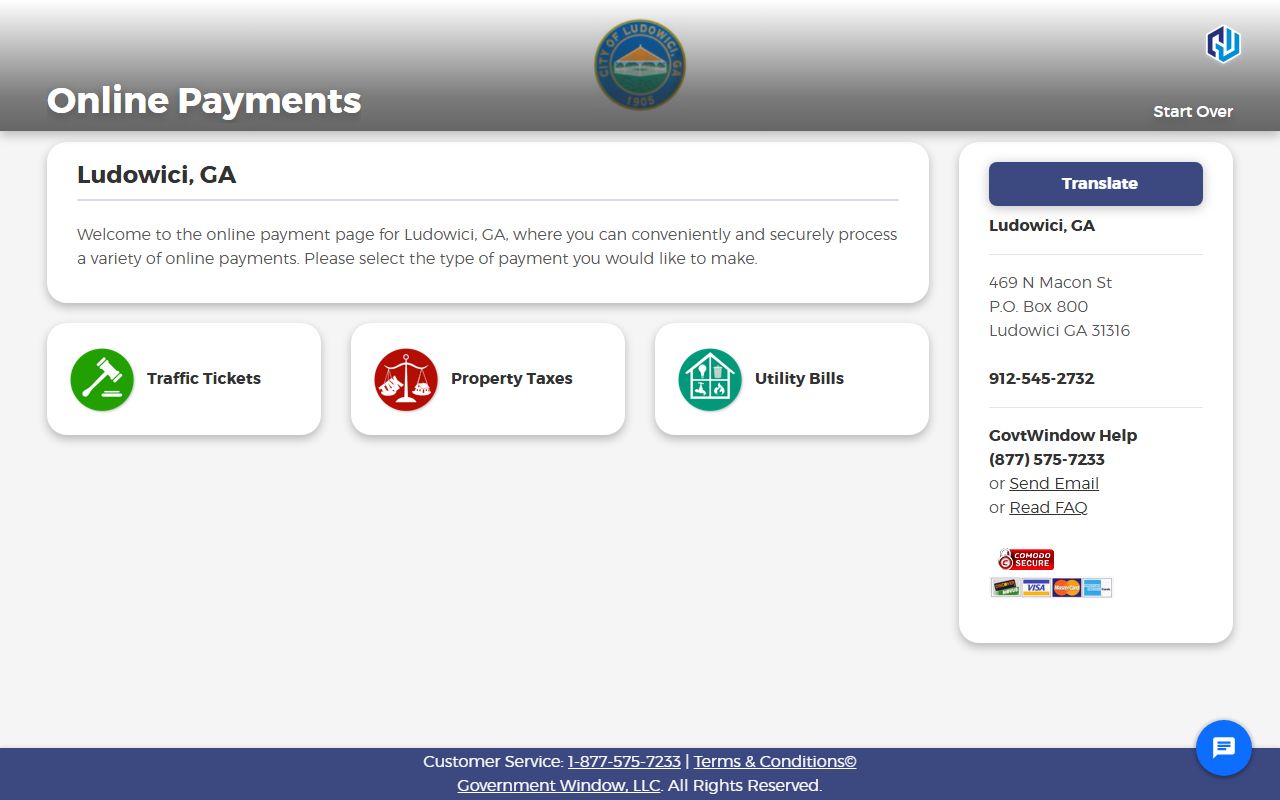
That split is a common reason a payment search can fail even when the citation is real.
Traffic Dockets and Payment Records
Traffic dockets deserve special care because payment portals are not full case files. Georgia Courts directs traffic users to provider resources such as Government Window, EZ Court Pay, and JusticeONE Pay. Georgia.gov says traffic fines generally need a citation number, court case number, or driver's license number plus a payment method, and most courts offer payment by online, phone, mail, or in person. In Long County, State Court traffic cases and Ludowici city tickets can follow different channels.
State guidance helps explain the payment side of a traffic docket. Georgia.gov describes traffic-ticket payment options and common identifiers.
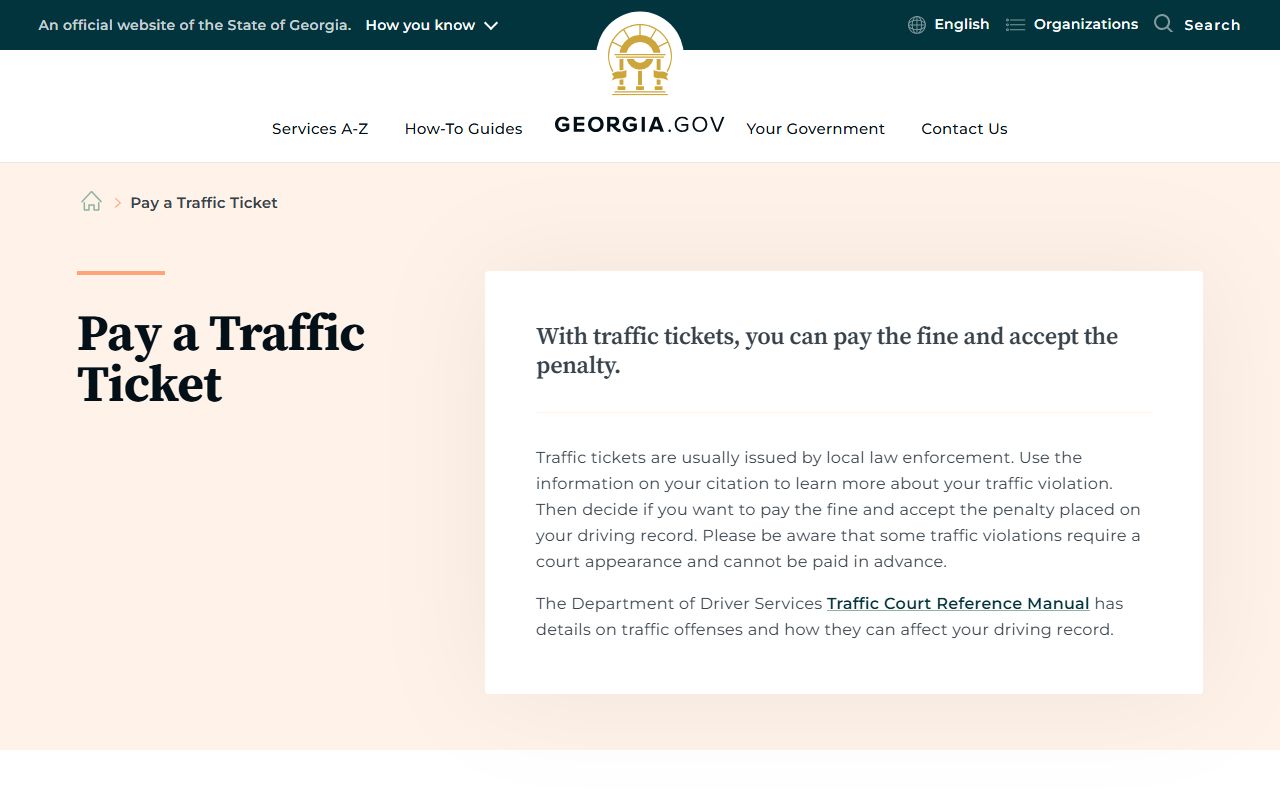
A paid traffic citation may still affect the court docket and later Georgia driver record, so docket and DDS records should not be treated as the same file.
Read a Long County Docket
Common docket terms should be read in context. A complaint starts many civil cases. An answer is the defendant's response. A motion asks the judge to act. An order is the judge's written decision. A disposition is how a case or charge ended. A bond entry may show release terms, but the Sheriff's Office states Long County bonds are set by Magistrate, State, or Superior Court, not by the sheriff.
Criminal and traffic dockets can change quickly. A charge may be amended, reduced, dismissed, or moved to a later date. A hearing may be continued. A final disposition may lag behind a payment screen or jail roster. For the full criminal case file, the Long County criminal court records page focuses on charges, pleas, dispositions, and sentencing.
- Docket
- A chronological list of filings and court events.
- Disposition
- The outcome of a case, claim, citation, or charge.
- Continuance
- A reset or postponement of a hearing or court event.
- Bench warrant
- A warrant often tied to a missed court date or court-order violation.