
Long County Criminal Court Records
A criminal court record is the case file kept by the court after a criminal matter enters the court system. In Long County, Superior Court is the general-jurisdiction trial court and handles felony criminal cases. State Court handles misdemeanor violations and traffic cases. Magistrate Court has important early criminal functions, including warrant applications, certain minor criminal matters, county ordinance violations, bail setting, and preliminary warrant work. Juvenile Court records are managed by the clerk but are restricted.
The Clerk of Superior Court is the main user-facing office for Superior, State, and Juvenile Court records. The GSCCCA directory identifies Sherry McFann Long as clerk, with the office managing those courts. For a felony or misdemeanor case file, a search usually starts by deciding whether the charge belongs in Superior Court or State Court, then checking provider access or contacting the clerk. The Long County arrest records and court charges page looks more closely at the charge rows and arrest-to-charge path before the full case record is read.
| Court | Criminal Role | Record Examples |
|---|---|---|
| Superior Court | Felony criminal cases and broad criminal jurisdiction. | Indictments, accusations, bond orders, pleas, trial entries, sentencing, probation terms. |
| State Court | Misdemeanors, traffic cases, and related payable matters. | Citations, accusations, pleas, fine assessments, continuances, dispositions. |
| Magistrate Court | Warrant applications, bail setting, minor criminal matters, county ordinance violations. | Warrant application records, preliminary entries, bond-related records. |
| Juvenile Court | Delinquency and other child-related proceedings. | Restricted files, usually not public adult criminal records. |
Search Long County Criminal Court Records
Long County does not publish a single county-owned public portal for every criminal case file. Georgia Courts e-access redirects users to provider websites, and provider access can require an account. PeachCourt registration is available to attorneys and non-attorneys, and PeachCourt says many Superior and State Court documents can be purchased online where participating courts provide access. If a Long County criminal court record is not available through provider access, the clerk may still hold the original docket and file.
- Start with the defendant name, case number, charge, approximate filing year, and court level if known.
- Check provider access through Georgia Courts e-access or PeachCourt for Superior and State Court documents where available.
- Use the Clerk of Superior Court for case dates, docket entries, certified copies, and files not shown online.
- For traffic or payable misdemeanor matters, check the Long County State Court payment portal and then confirm the case status with the clerk.
- For jail custody or bond status, check the sheriff roster, but use the court file for pleas, dispositions, and sentencing.
Georgia's first-offender public-access rule is a key limit on some criminal court records. O.C.G.A. Section 42-8-62.1 addresses public access to certain first-offender records.
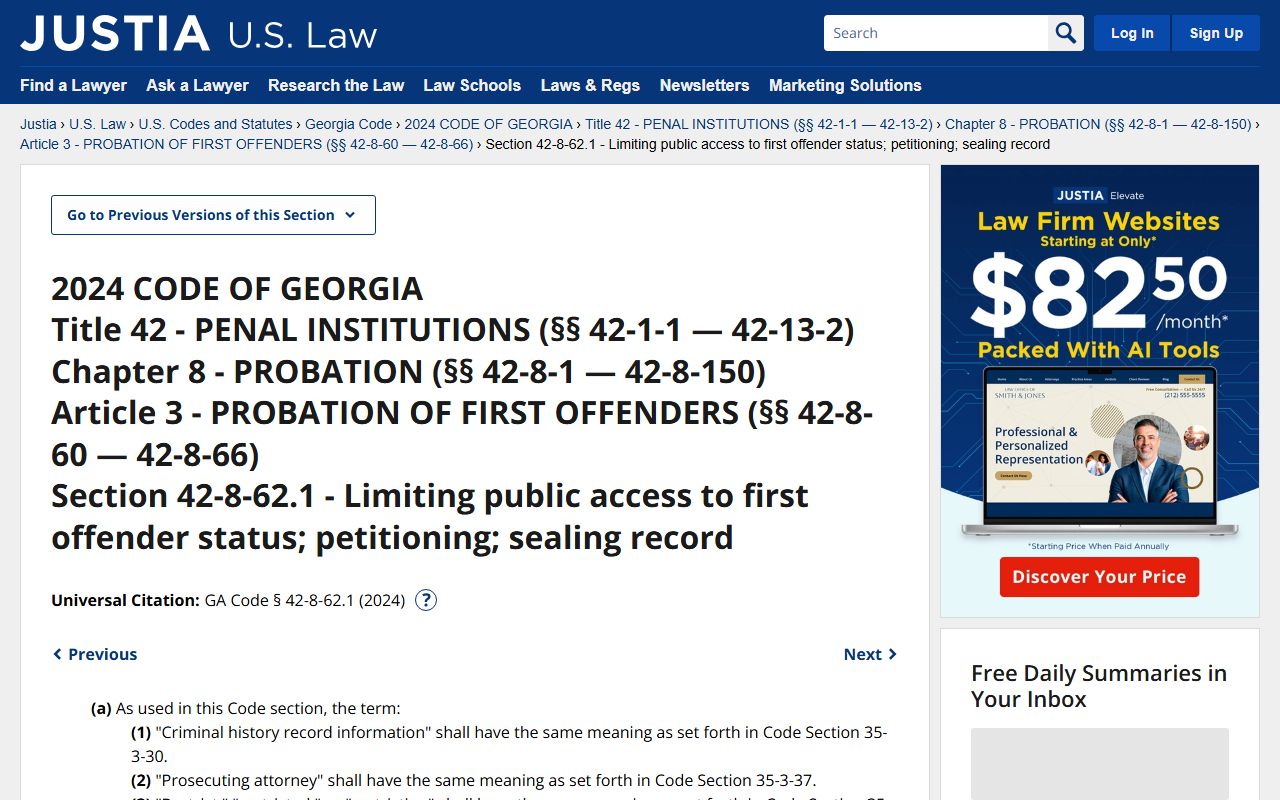
That rule can affect whether the public can see a case outcome even when the case once appeared in a court or criminal-history source.
Long County Criminal Case Flow
The criminal case file grows as a matter moves through court. The booking record may show an arrest date, warrant number, statute, and bond status, but the court record shows what was formally filed and how the judge handled the case. Felony cases can include warrants, accusations or indictments, bond orders, arraignment entries, motions, plea paperwork, trial entries, sentencing, probation terms, and final disposition.
Case flow: Charges Filed › Arraignment › Pretrial and Motions › Plea or Trial › Disposition › Sentencing
| Stage | What Happens | How It Appears in the Record |
|---|---|---|
| Charges Filed | The prosecutor files an accusation or the grand jury returns an indictment. | Charge list, statute, count number, and court assignment. |
| Arraignment | The defendant is advised of charges and enters a plea. | Arraignment entry, plea notation, counsel information, next date. |
| Pretrial and Motions | Parties file requests about evidence, bond, scheduling, or dismissal. | Motions, responses, orders, continuances, hearing entries. |
| Plea or Trial | The case resolves by plea, bench trial, jury trial, dismissal, or acquittal. | Plea form, verdict, dismissal order, or trial result. |
| Sentencing | The court sets jail, prison, probation, fines, costs, restitution, or conditions. | Sentence, probation terms, payment obligations, and final disposition. |
Long County Criminal Record Fields
A criminal court record should be read field by field. A charge row alone does not prove conviction. A disposition line may apply to one count but not another. Bond status may come from a different court than the final sentence. Long County inmate roster entries show statute numbers, warrant numbers, M/F classification, court values, and bond information, but those custody fields should be checked against the court case file for final court action.
| Field | What It Shows |
|---|---|
| Case Number | The court identifier for the criminal case. |
| Defendant | The person charged in the court case. |
| Charge or Count | The offense filed by accusation, indictment, complaint, or other charging document. |
| Statute | The Georgia code section tied to the charge, such as O.C.G.A. criminal-code references. |
| Plea | How the defendant responded to the charge, such as guilty, not guilty, or nolo contendere. |
| Disposition | How each charge ended, including guilty, dismissed, acquitted, nolle prosequi, or other outcome. |
| Sentence | Jail, prison, probation, fine, restitution, costs, or other court-ordered terms. |
| Bond | Release terms set by Magistrate, State, or Superior Court where shown. |
Charges and Convictions Compared
A charge is an accusation filed into the court record. A conviction is an outcome after a guilty plea, verdict, or other qualifying final action. Long County criminal court records may show charges that were amended, reduced, dismissed, or not prosecuted. That is why a criminal court record should be read through the disposition and sentence, not just the opening charge list.
| Question | Charge | Conviction |
|---|---|---|
| When It Appears | At or near the start of the criminal case. | After plea, verdict, or final court action. |
| What It Means | The state has accused the person of an offense. | The court has entered guilt or an equivalent final result. |
| Can It Change | Yes, it can be amended, reduced, dropped, or dismissed. | It can be appealed, corrected, restricted, or affected by later orders. |
| Where to Verify | Charging document, docket, and clerk file. | Disposition, sentence, final order, and certified copy. |
Long County Prosecutor and Defense
The Atlantic Judicial Circuit District Attorney prosecutes felony crimes in Long County and the other circuit counties. The research identifies District Attorney Billy J. Nelson Jr. and the Hinesville office. Prosecutors decide what charges move forward after arrest, warrant, booking, and law-enforcement review. That decision shapes the criminal court record because the court file reflects the charges actually filed, not every allegation mentioned at arrest.
The Atlantic Judicial Circuit Public Defender's Office serves Long County and surrounding counties. Public defender information is part of the criminal court system because appointment, counsel notices, plea negotiations, motions, and hearing entries may appear in the case record. The office is not a records custodian, but defense representation can explain docket events in a criminal case.
Criminal-history records can also be obtained through law-enforcement channels. The Georgia Bureau of Investigation services page notes criminal history records may be obtained from local sheriff's or police departments.
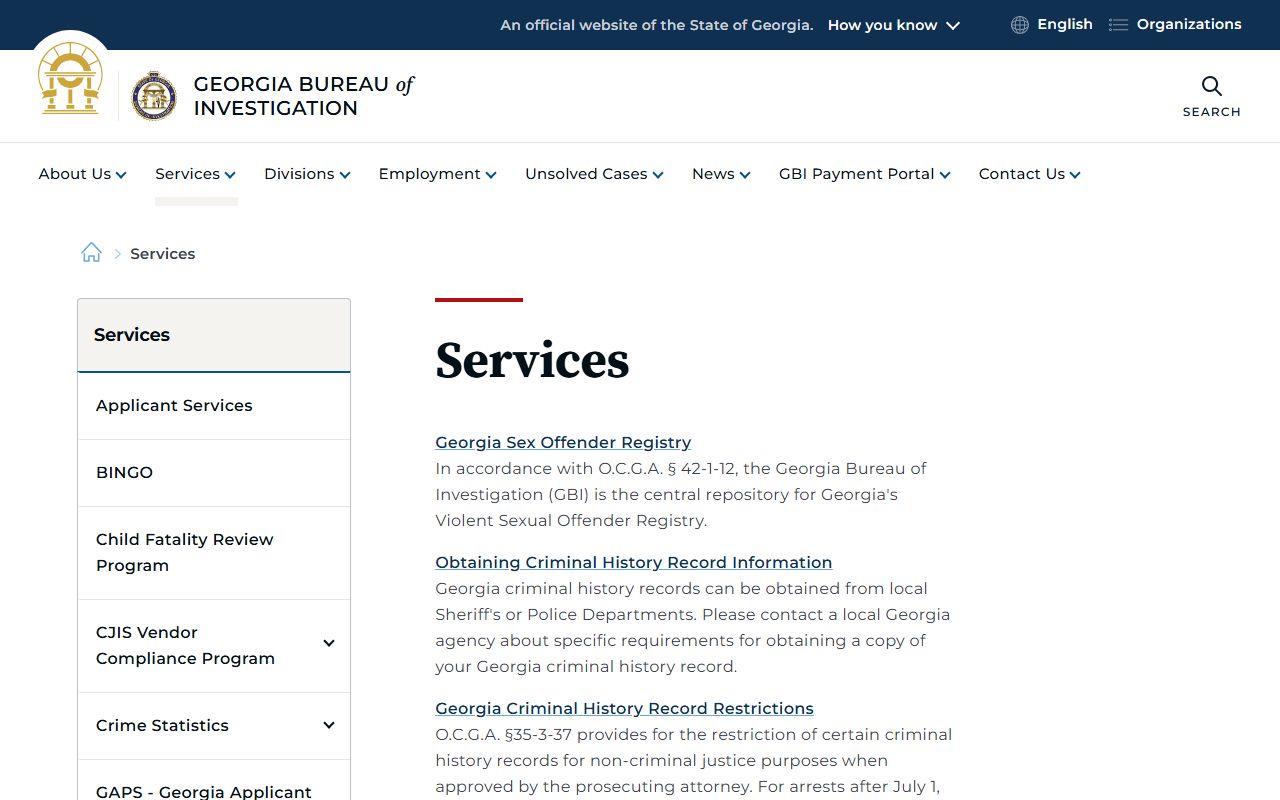
That state-level criminal-history route is separate from a certified Long County court file kept by the clerk.
Public Access to Long County Criminal Records
Criminal case files are often public, but Georgia law allows limits. The Georgia Open Records Act applies broadly to agency records, while court case records also have court-specific sealing, redaction, and confidentiality rules. O.C.G.A. Section 35-3-37 provides Georgia's criminal-history record restriction process for qualifying dispositions and related jail or law-enforcement records. O.C.G.A. Section 15-11-701 governs sealing of juvenile files. O.C.G.A. Section 42-8-62.1 limits public access for some first-offender records.
| Record Limit | What It Means | Long County Access Effect |
|---|---|---|
| Juvenile restriction | Child-related delinquency files are not ordinary adult public records. | Access may require party status, attorney role, court staff authority, or court order. |
| Record restriction | Qualifying criminal-history information may be hidden from public access. | Check both court disposition and criminal-history record. |
| First-offender limitation | Some successful first-offender matters become unavailable to the public. | Provider or public search may not show the final file. |
| Sealed court order | A judge restricts access to part or all of the file. | Only authorized users may see the sealed material. |
Sealed and Expunged Records
Georgia often uses the term record restriction rather than expungement for many criminal-history situations. A sealed court record is hidden from public view by law or court order. A restricted criminal-history record limits public access to law-enforcement or criminal-history information after a qualifying result. These are not automatic for every dismissal or plea, and a court file, jail record, prosecutor record, and state criminal-history record may need separate review.
| Question | Sealed | Restricted / Expunged |
|---|---|---|
| Public Visibility | Hidden from ordinary public court access. | Limited from public criminal-history access when eligible. |
| Legal Source | Court order, juvenile law, adoption confidentiality, or specific statute. | Georgia record restriction law and related criminal-history procedures. |
| Access by Officials | May remain available to the court or authorized agencies. | May remain available for law-enforcement or statutory uses. |
| Long County Step | Ask the clerk what order controls access. | Check disposition, arresting agency route, prosecutor role, and GCIC process. |
Note: A missing online criminal record may reflect provider limits, sealing, restriction, or an office-held file.
Recent Long County Criminal Context
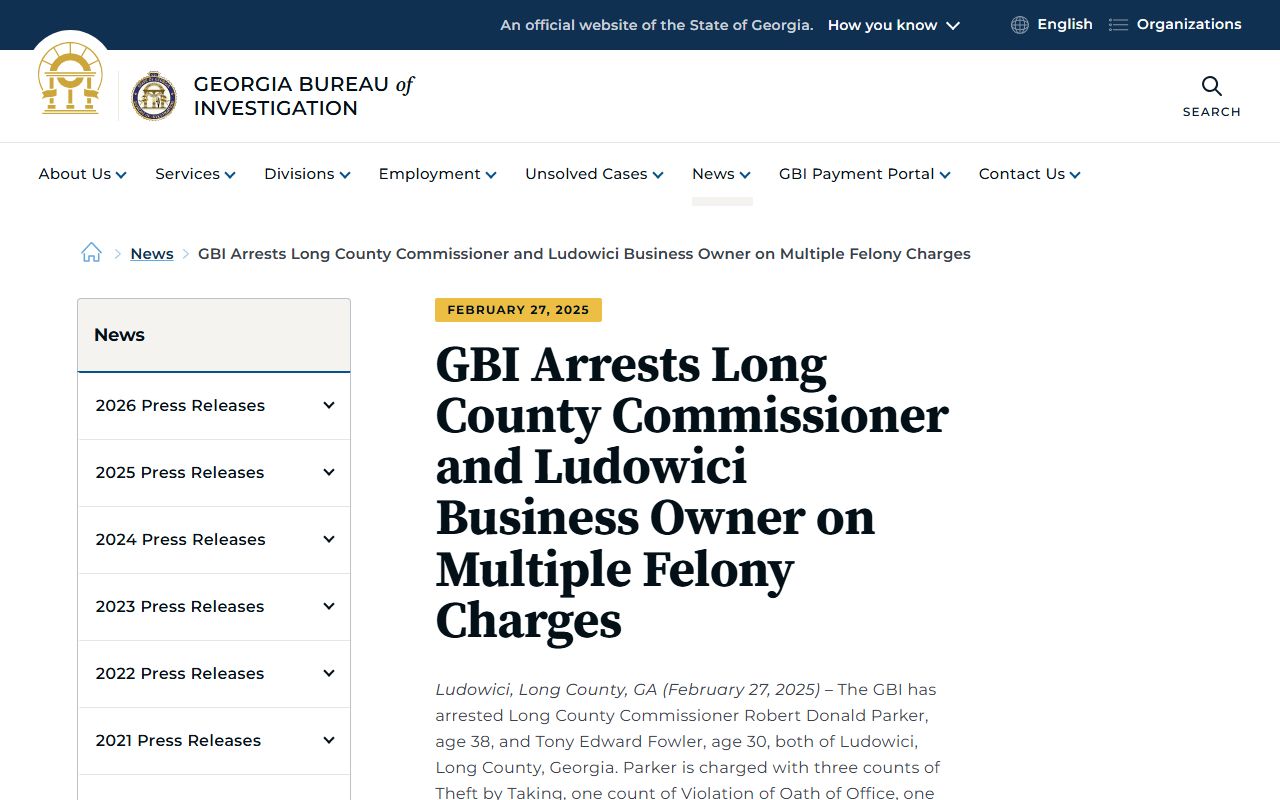
Evergreen criminal record searches should rely on the court file, but official law-enforcement releases can explain why a matter may later appear in court records. The research captured a February 27, 2025 GBI release about arrests connected to a Long County public-corruption investigation. That release named charges from the investigation, but the court record remains the source for docket events, plea status, disposition, and sentence if a case is filed.
The GBI release is official law-enforcement context, not a substitute for the clerk's court file. The February 27, 2025 GBI Long County press release describes arrests and listed charges.
For case status after any arrest, the court docket and final disposition control the criminal court record.