
Long County Superior Court Overview
Georgia's court structure places Long County's primary trial-court focus on Superior Court. Long County does not use a district-court label for its main county-level trial court. Superior Court is the constitutional trial court of general jurisdiction and sits within the Atlantic Judicial Circuit, which also serves Bryan, Evans, Liberty, McIntosh, and Tattnall counties.
The local court address used in the research is 49 South McDonald Street, Ludowici, Georgia 31316. The Clerk of Superior Court is reached through Sherry McFann Long's office at 458 South McDonald Street and P.O. Box 458, Ludowici, GA 31316, phone (912) 545-2123. The two addresses should be read as courthouse and clerk contact references within the local courthouse area, not as separate trial-court systems.
Long County Superior Court
49 South McDonald Street
Ludowici, GA 31316
(912) 545-2123
Atlantic Judicial Circuit
Clerk of Superior Court
458 South McDonald Street
P.O. Box 458
Ludowici, GA 31316
(912) 545-2123
Superior, State, and Juvenile Court records
Long County Superior Court Judges
Long County has one county Superior Court within a multi-county circuit rather than a list of numbered district courts. The judge table below uses the required trial-court table format, adapted to the Atlantic Judicial Circuit judges identified in the research. These judges may hear Superior Court matters across the circuit, with offices in nearby counties.
| Court or Judge | Type | Address | Phone |
|---|---|---|---|
| Chief Judge Robert L. Russell III | Superior Court | P.O. Box 581, Darien, GA 31305 | (912) 437-3033 |
| Judge Charles P. Rose Jr. | Superior Court | 201 S. Main St., Suite 3104, Hinesville, GA 31313 | (912) 877-4770 |
| Judge D. Jay Stewart | Superior Court | P.O. Box 842, Claxton, GA 30417 | (912) 739-4922 |
| Judge Glen A. Cheney | Superior Court | P.O. Box 217, Reidsville, GA 30453 | (912) 557-8686 |
| Judge Mark Hendrix | Superior Court | 201 S. Main Street, Suite 3102, Hinesville, GA 31313 | (912) 876-4720 |
Superior Court vs Lower Courts
Long County court records are easier to route when the case type is matched to the correct court. Superior Court has the broadest trial jurisdiction. State Court handles misdemeanor, traffic, and certain civil matters. Probate Court, Magistrate Court, Juvenile Court, and Municipal Court each have narrower roles. A record that starts in one court may still create related records in another court, such as a Magistrate warrant that later appears in a Superior Court felony case.
| Topic | Superior Court | State Court | Probate or Magistrate Court |
|---|---|---|---|
| Main role | General jurisdiction trial court | Misdemeanor, traffic, and certain civil cases | Probate, marriage, small claims, dispossessory, warrants, and bail functions |
| Criminal matters | Felony cases and related orders | Misdemeanor and traffic cases | Warrant applications, minor matters, and first-step functions |
| Family matters | Divorce and related Superior Court filings | Not the main divorce court | Guardianship and conservatorship in Probate Court |
| Records contact | Clerk of Superior Court | Clerk of Superior Court | Probate or Magistrate Court staff |
Long County Superior Court Flow
Superior Court case flow depends on the case type. A felony matter may start with arrest, warrant, bond, and first appearance activity before the prosecutor files an accusation or an indictment. A divorce or civil case begins with a complaint or petition, then moves through service, answer, motions, hearings, and final judgment. Appeals from trial courts generally move to the Court of Appeals of Georgia unless Supreme Court jurisdiction applies.
Criminal flow: Arrest › First Appearance › Accusation or Indictment › Arraignment › Pretrial Motions › Plea or Trial › Sentencing › Appeal
Civil and divorce flow: Petition Filed › Service › Answer › Motions or Mediation › Hearing or Trial › Judgment › Appeal
Note: Juvenile records are managed by the clerk but are not searched like ordinary adult Superior Court files.
Atlantic Judicial Circuit Records
The Atlantic Judicial Circuit provides the regional frame for Long County Superior Court. Circuit-level court administration and ADR contacts are in Hinesville, and the circuit serves six southeast Georgia counties. Long County residents may see judge offices, specialty court contacts, or administrative contacts in another circuit county even when the case itself belongs to Long County.
Accountability court information in the research points to circuit resources such as Drug Court and Veterans Treatment Court. Those programs are tied to criminal-case management and eligibility decisions, not public case-search portals. Public record access still runs through the Clerk of Superior Court, PeachCourt where available, and the local court office for certified records.
Long County Lower Courts
Long County State Court handles misdemeanor violations, traffic cases, and civil actions unless Superior Court has exclusive jurisdiction. State Court is held on the second and fourth Wednesday at 9:00 a.m. unless notice says otherwise. Long County Probate Court handles wills, estates, guardianships, conservatorships, marriage licenses, weapons carry licenses, and vital-record tasks. Magistrate Court handles civil claims up to $15,000, dispossessories, garnishments, bad checks, warrant applications, search and arrest warrants to law enforcement, county ordinance violations, minor criminal matters, and bail setting.
Municipal Court matters are narrower still. Ludowici has a Government Window payment page for city traffic tickets, property taxes, and utilities, but a separate official municipal court page was not located in the research. When a citation or warrant appears tied to a city matter, the State Court, city payment channel, and Clerk of Superior Court may need to be checked in sequence.
Federal Courts Are Separate
Long County is in the federal Southern District of Georgia, but federal court records are not Long County Superior Court records. Federal civil, criminal, and bankruptcy cases use federal court systems such as CM/ECF and PACER. State Superior Court records use the Long County clerk and Georgia provider access. The distinction matters because a person, company, or incident in Long County can appear in both state and federal systems for different reasons.
The U.S. District Court for the Southern District of Georgia is the federal trial court source for district-level federal cases.
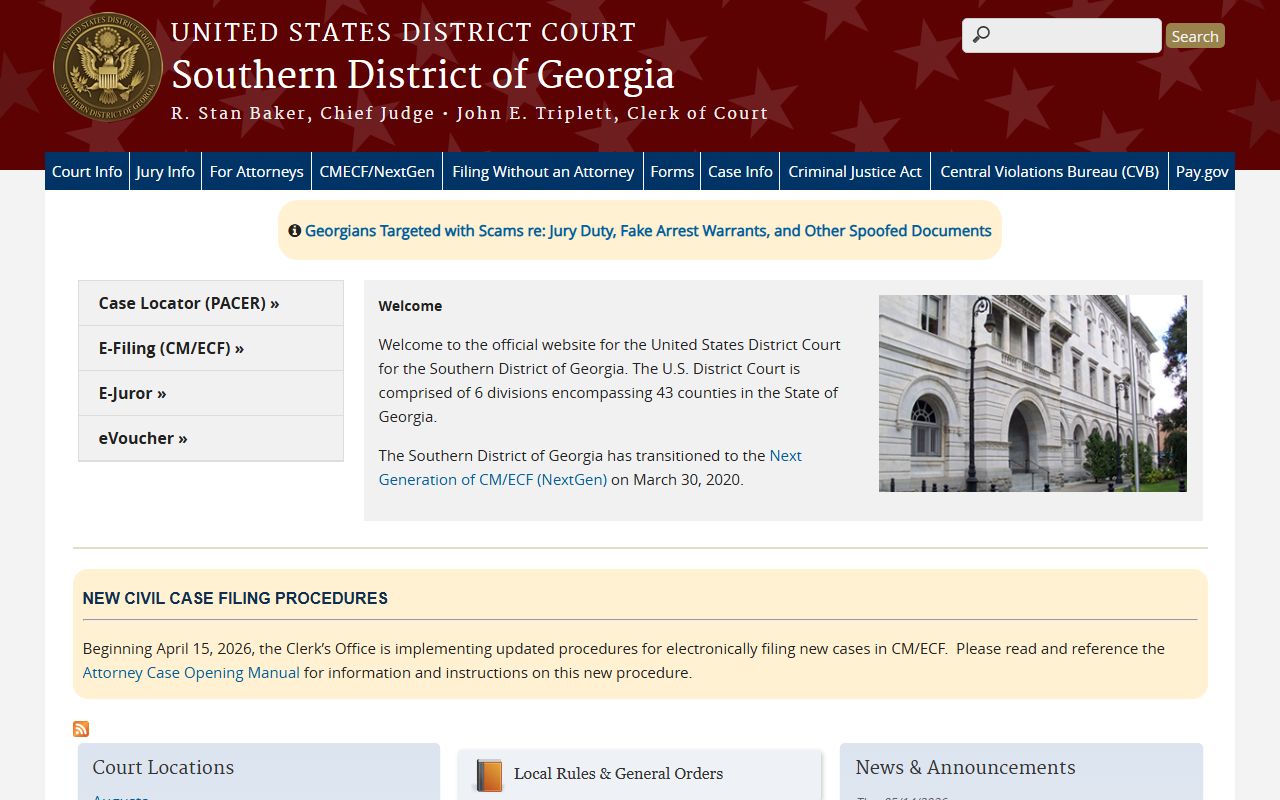
This federal district page is useful as a contrast point, not as the place to search Long County Superior Court case files.
The Southern District court information page identifies federal court leadership and structure.
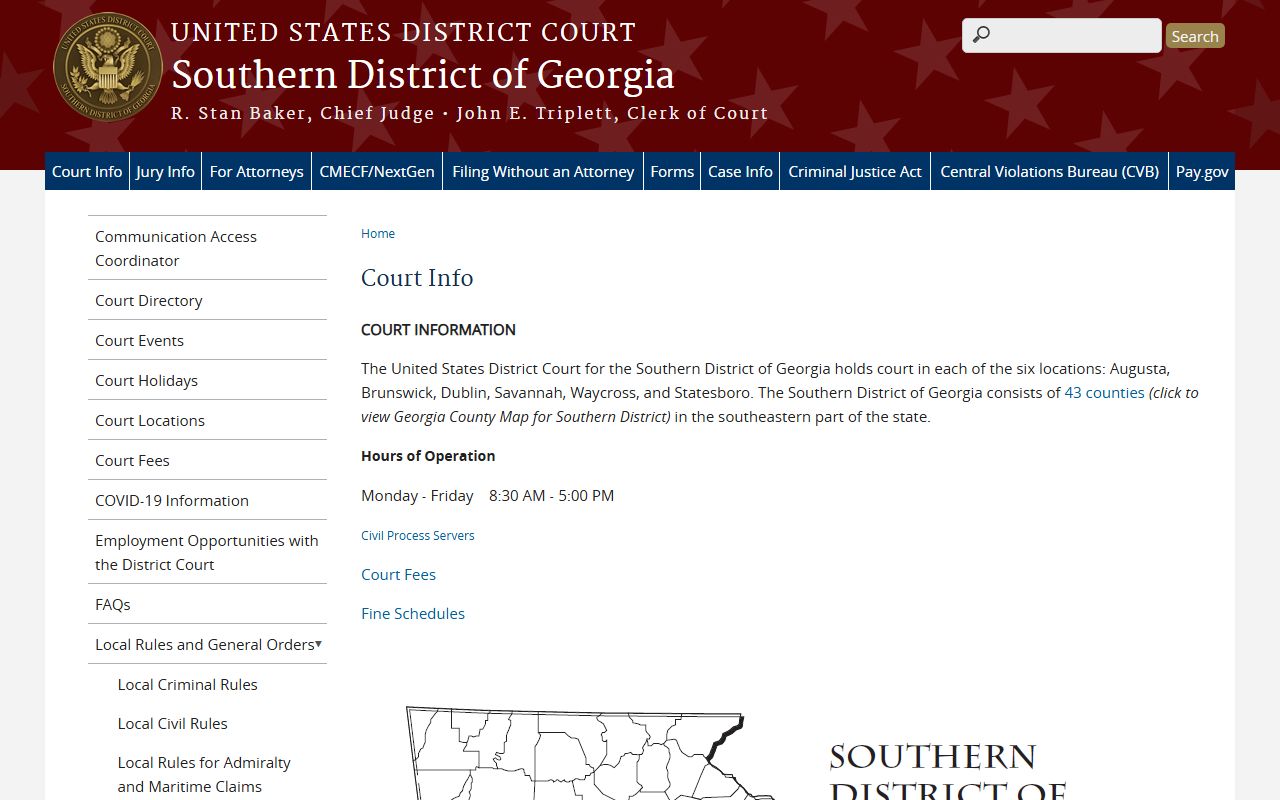
Federal court leadership details do not change the local Superior Court clerk route for Long County records.
The Southern District CM/ECF system is for electronic federal filing and docket access.
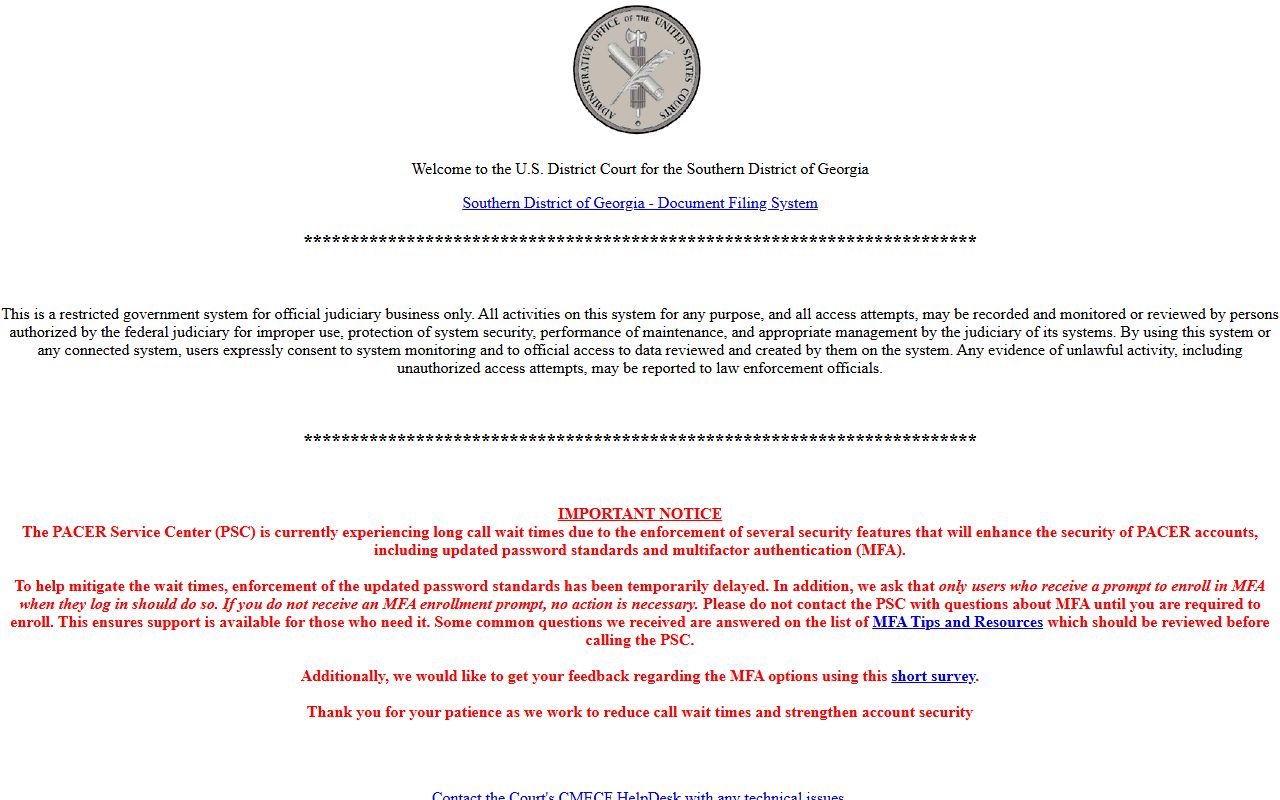
CM/ECF is relevant only when the case is federal, so it should not be confused with PeachCourt or the county clerk.
Federal Record Access Channels
Federal case access is account-based and separate from county case access. PACER is the main federal case-access system. Bankruptcy matters for this region route through the U.S. Bankruptcy Court for the Southern District of Georgia. Appeals from federal district court go to the U.S. Court of Appeals for the Eleventh Circuit. Those federal systems may matter when a Long County person has a federal criminal, civil rights, bankruptcy, habeas, or diversity case, but they do not replace Superior Court records.
PACER is the federal docket and document access system.
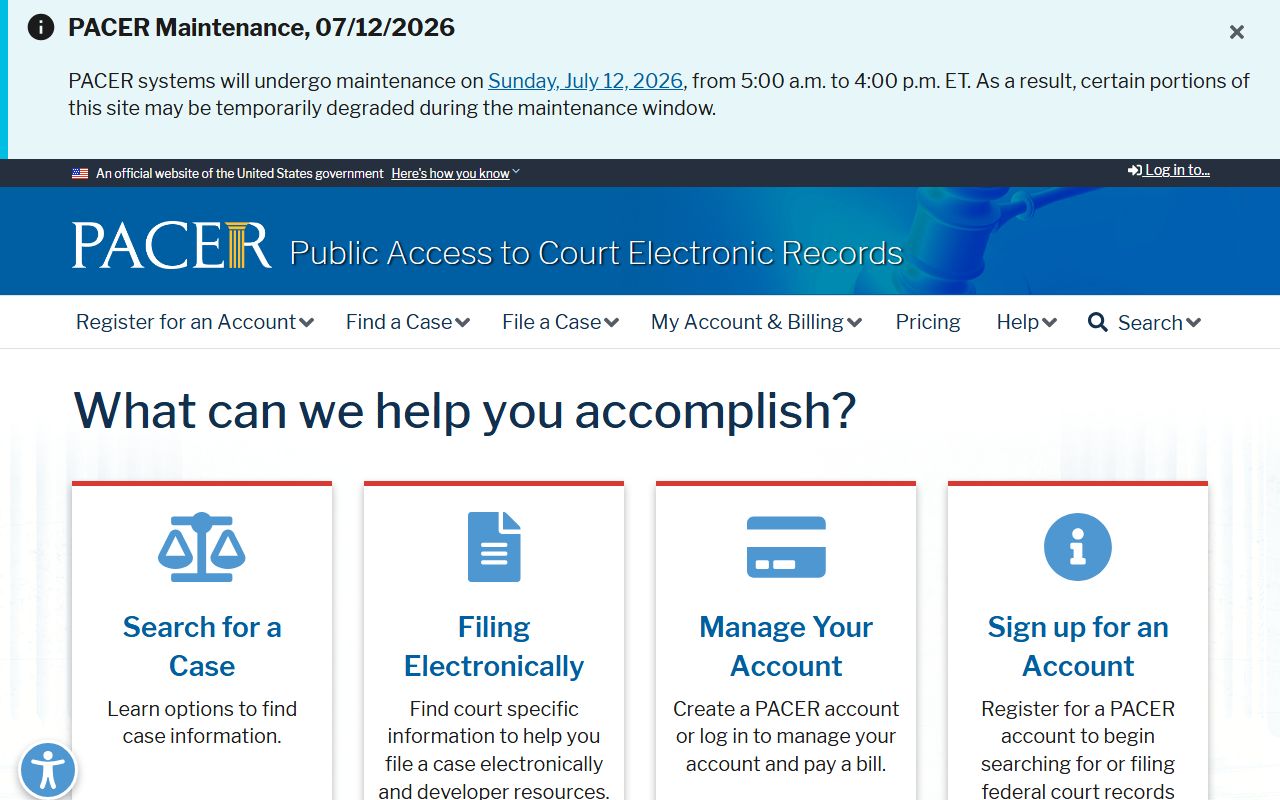
PACER should be used only after confirming the matter belongs in federal court rather than Long County Superior Court.
The U.S. Bankruptcy Court for the Southern District of Georgia handles federal bankruptcy records.
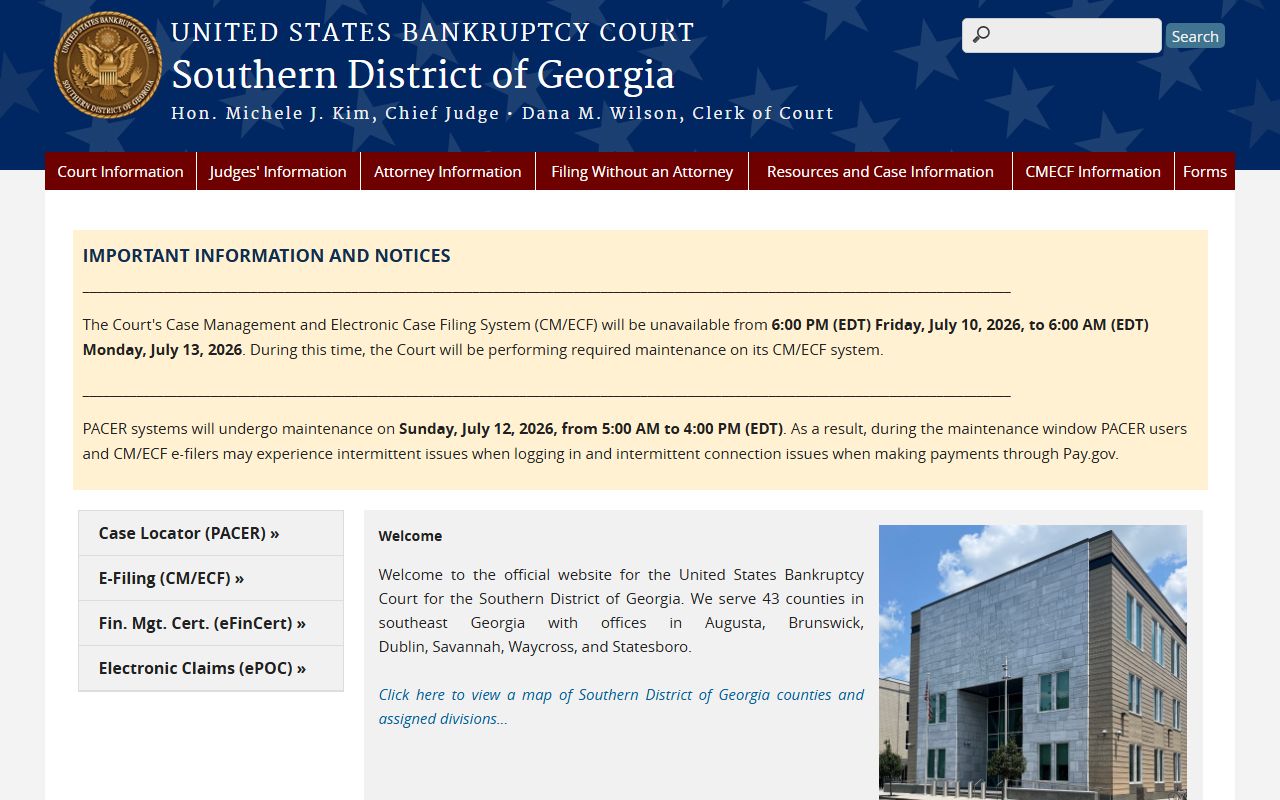
Bankruptcy records are federal financial case records, not county probate or Superior Court civil files.
The Eleventh Circuit is the federal appellate court for Southern District federal appeals.
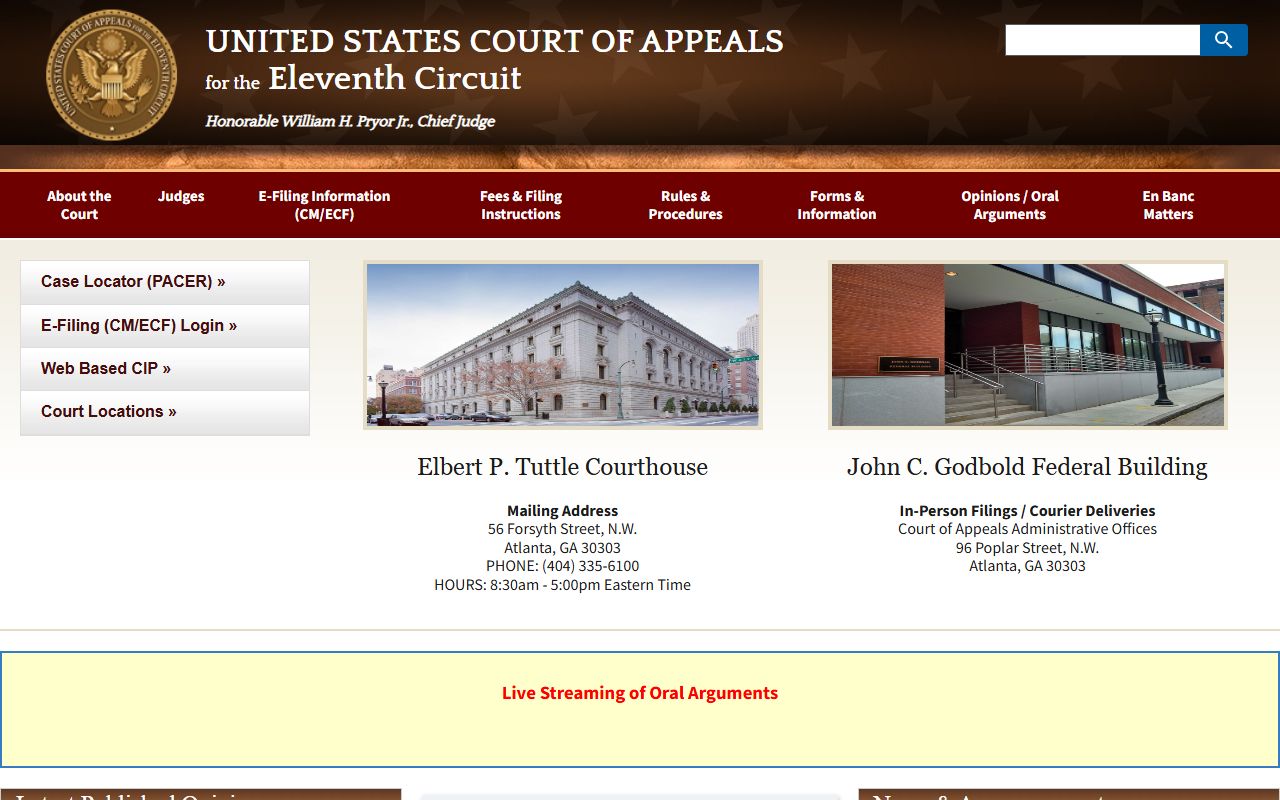
State appeals from Long County trial courts instead follow Georgia's appellate structure, usually the Court of Appeals of Georgia unless Supreme Court jurisdiction applies.